
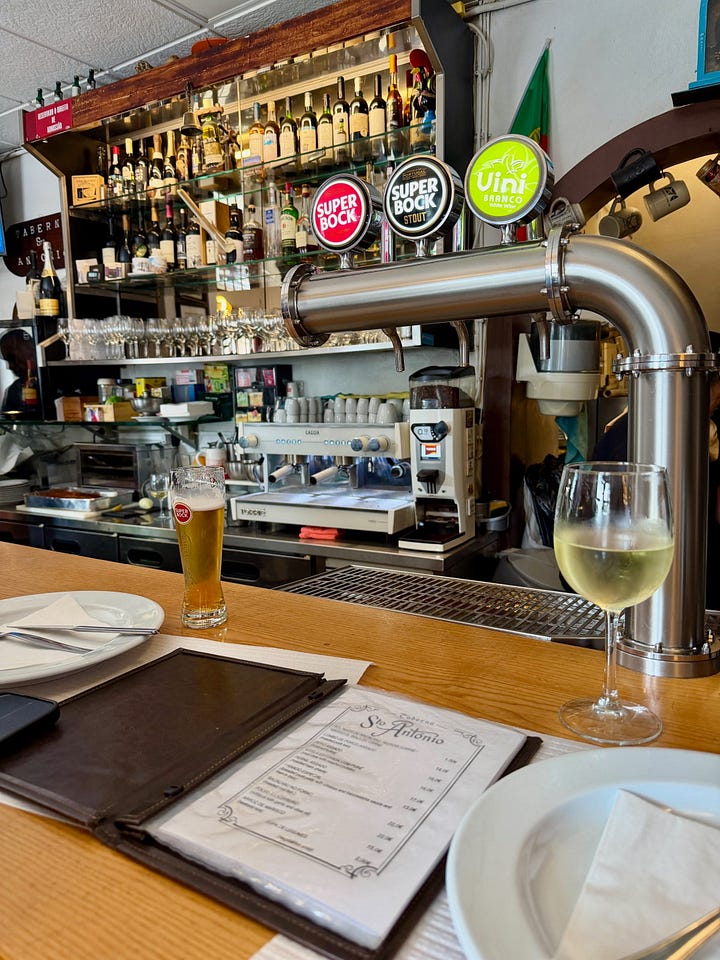
“Bom dia,” I said to the waiter in wobbly Portuguese, belly up to the bar at Taberna Santo António in Miragaia. He returned a warm smile and came back moments later with an ice-cold Superbock for my husband and a very generous pour of Vinho Verde for me. I took one sip and thought, I think I’m going to like it here.
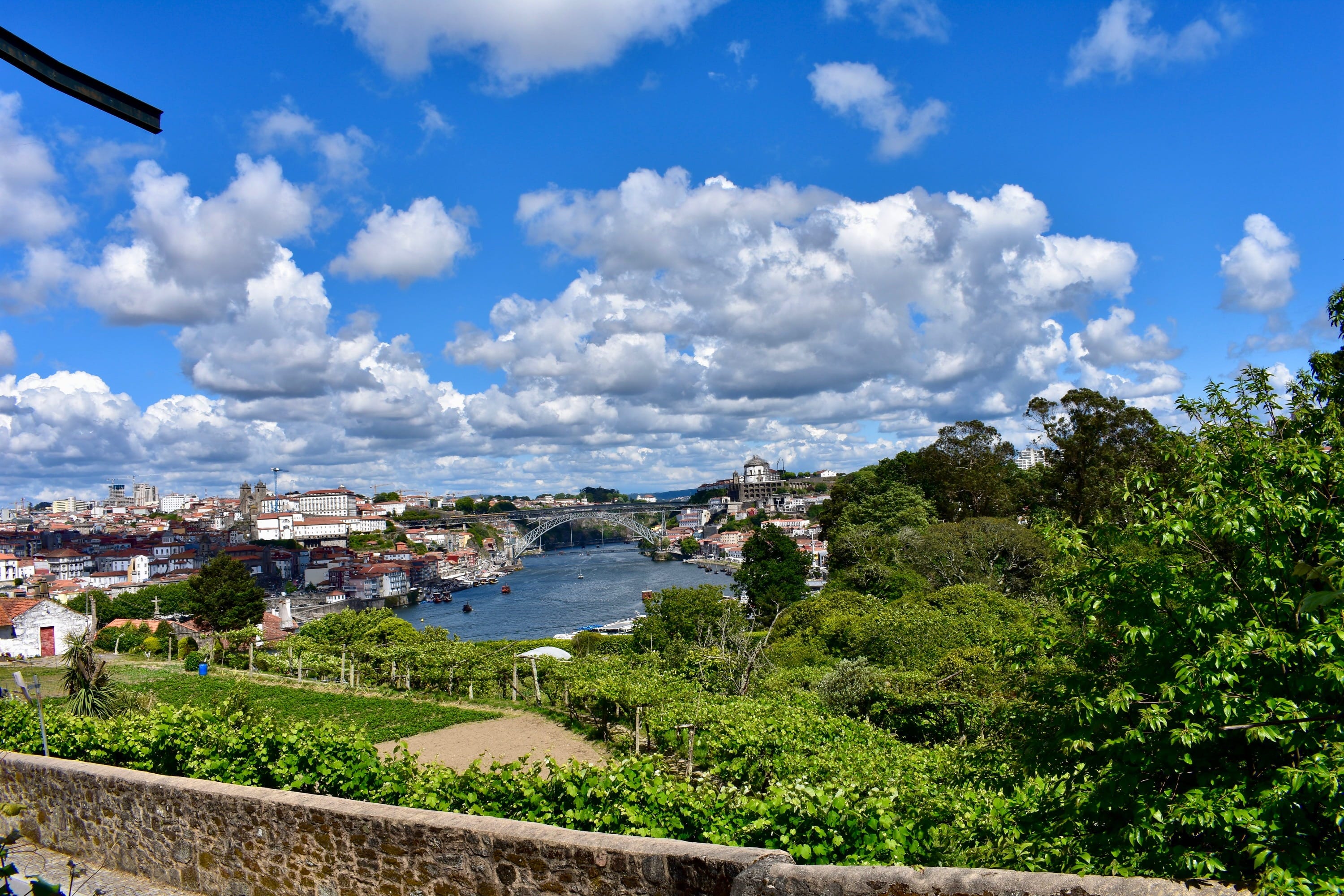
In many ways, Porto is exactly what I expected. Terracotta rooftops stacked along the Douro as if they grew there. Cobblestone streets that twist and turn their way through the small city (one of which reminded me of Diagon Alley). The seafood is fresh, simple, and abundant; the Vinho Verde is cold and crisp and disappears faster than you planned. And then there’s the port: rich, slightly sweet, best enjoyed while you’re watching the river and not thinking about much at all.
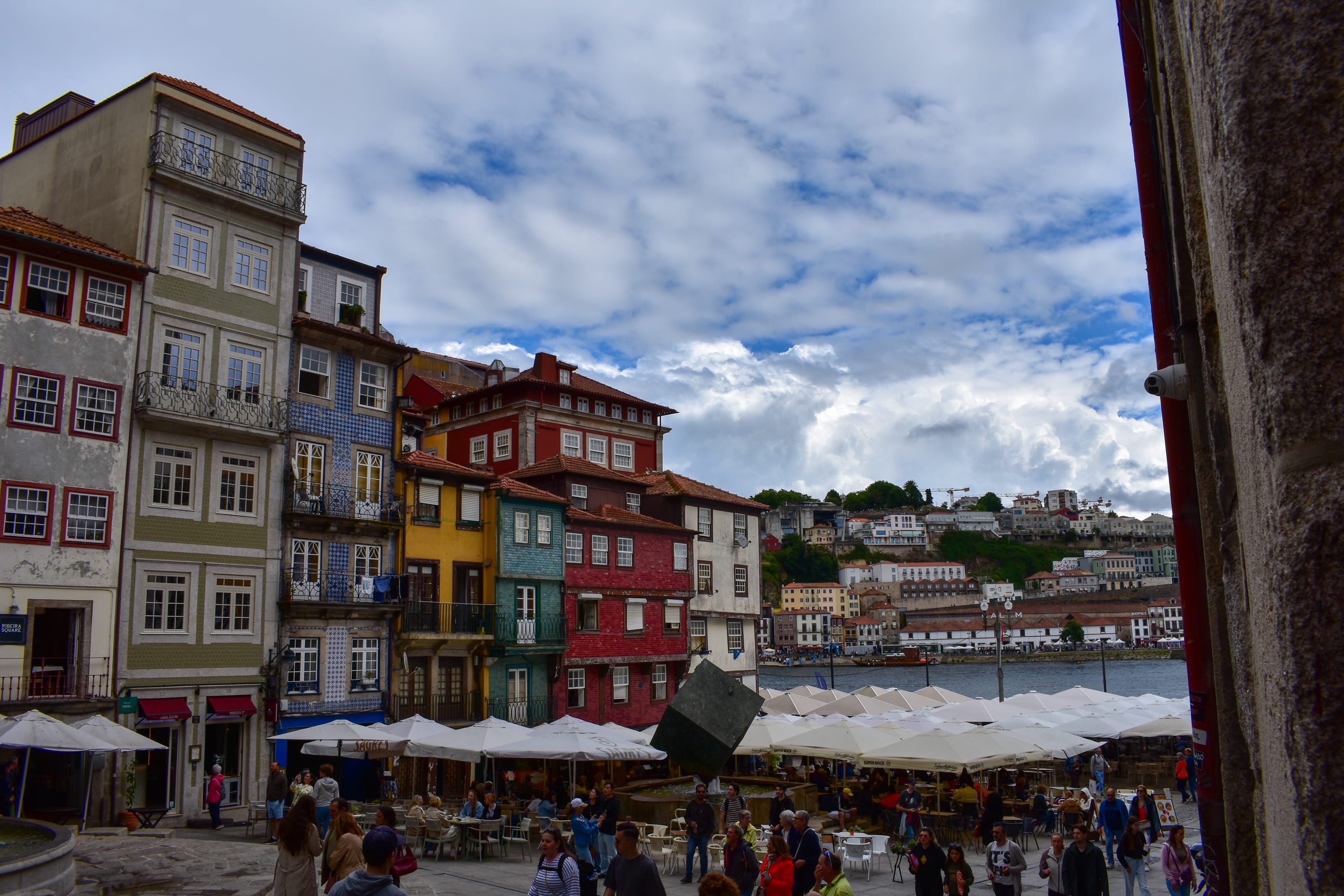
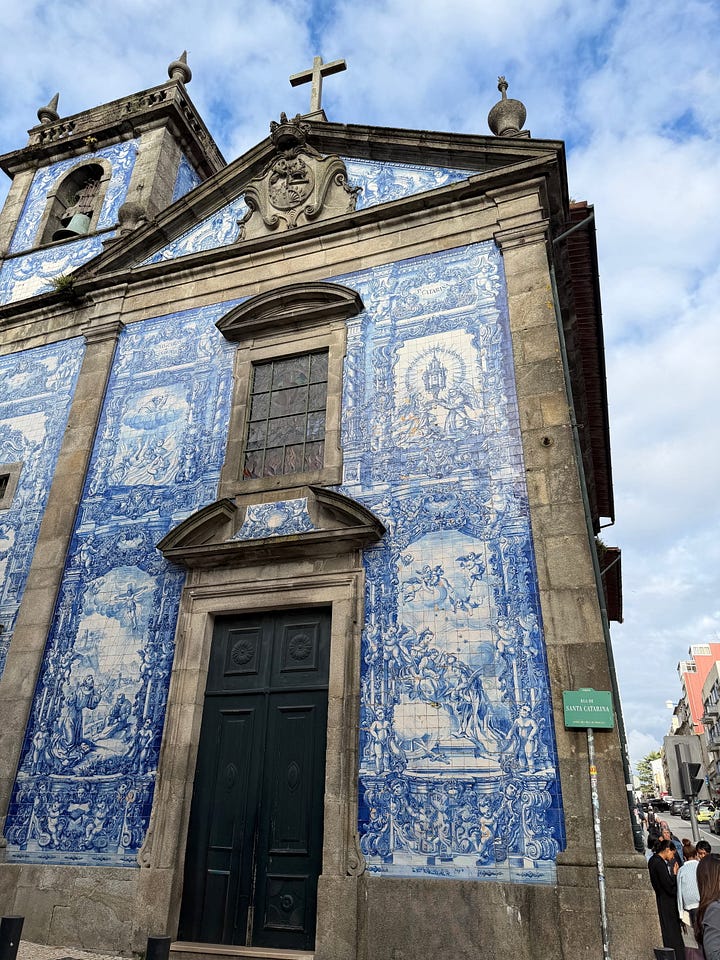
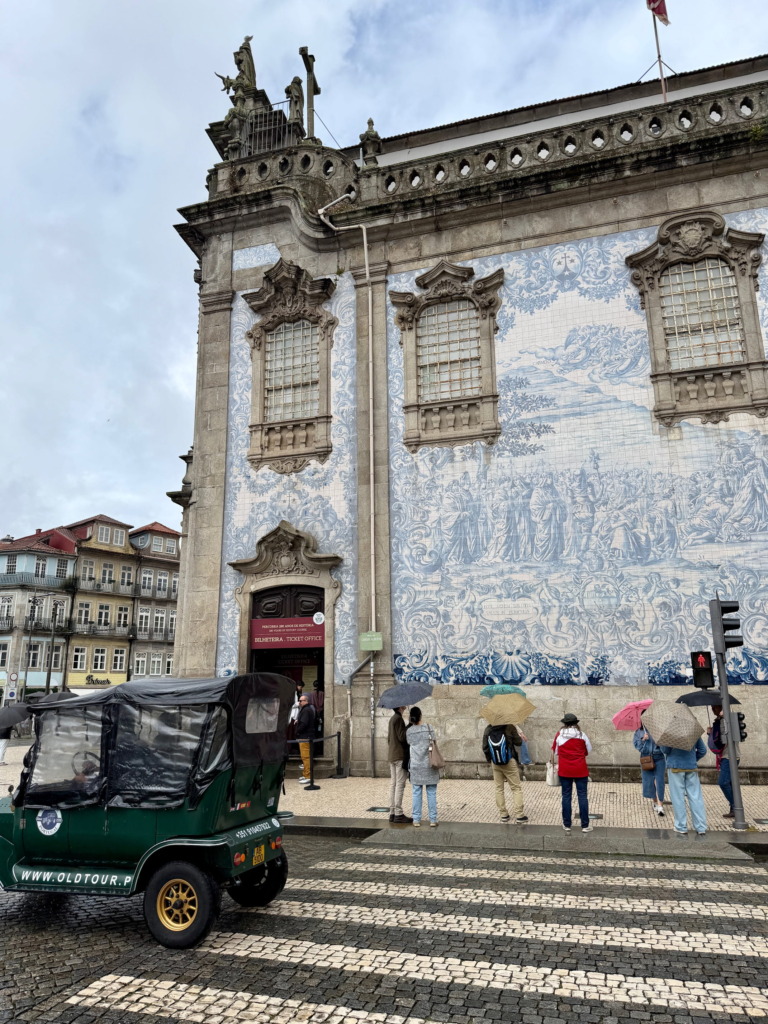
Traditional painted ceramic tiles, or azulejos, are everywhere: blue and white, faded and cracked. The balconies look like they’ve been holding their breath for a hundred years. Parts of Porto reminded me of New Orleans, actually. That same gorgeous decay, that same feeling that the city has seen it all and wears it well.
There’s a warmth to Porto that makes it an easy place to land. We used it as the first stop on a week in Portugal, and what follows is where we stayed, what we ate, what was worth it, and a few things I’m saving for next time.

Where to Stay in Porto
Torel Avantgarde
I’ll save you the suspense: Torel Avantgarde is a nice stay, but I don’t think it’s Porto’s most interesting option. Book it for the views (the Douro stretches out below you in a way that makes you feel like you chose correctly), and for the breakfast, which is included and surprisingly good. Proper pastries, strong coffee, fresh fruit, and an egg station. Grab a table by the window and take your time.
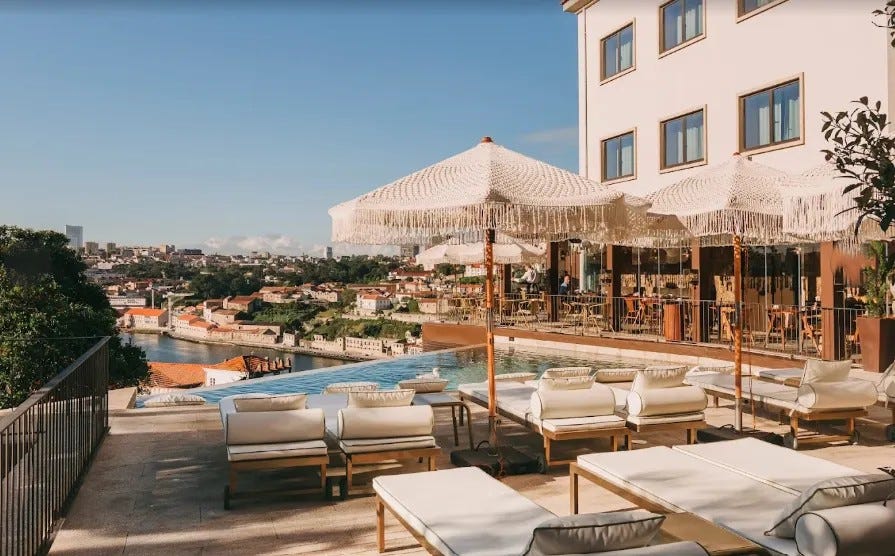
What Torel Avantgarde is not: particularly memorable in the room itself, and the lush pool setup splashed across the website (see below) was nowhere to be found when we arrived in early May. Apparently, that’s not quite sunbathing season in Porto. Noted.
I’d stay here again in a pinch, but Porto has a strong boutique hotel scene and I think there are better fits for the city’s character. For next time, I’m looking at G.A. Palace Hotel in the heart of the historic center, or The Yeatman across the river in Vila Nova de Gaia. The latter has the views and the Michelin-starred restaurant to match. Worth the upgrade conversation.
Eat & Drink in Porto
Cozinha das Flores
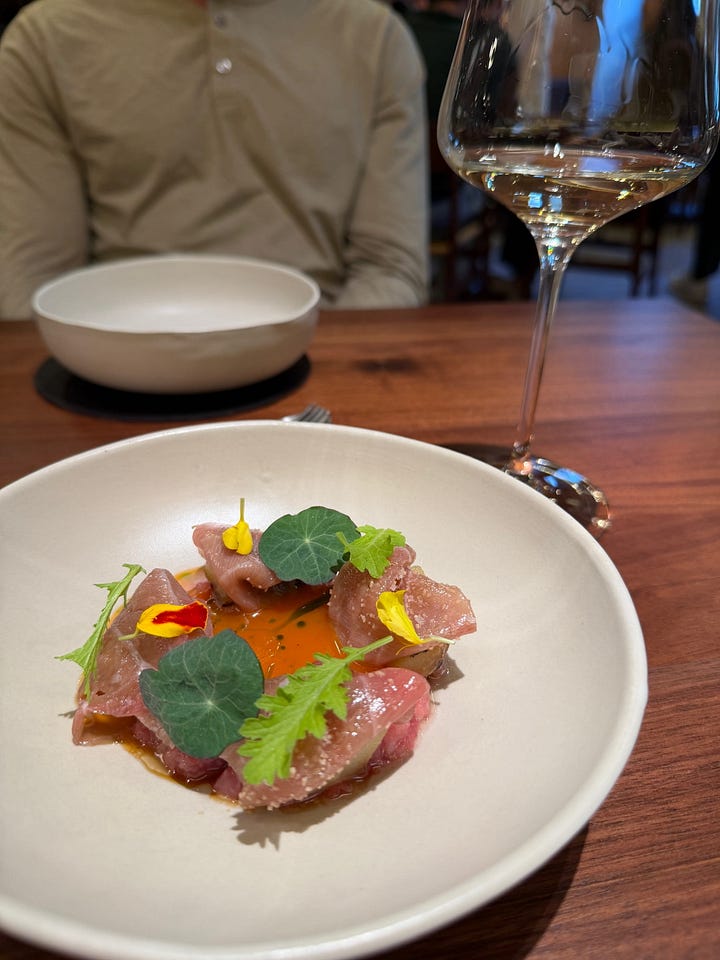
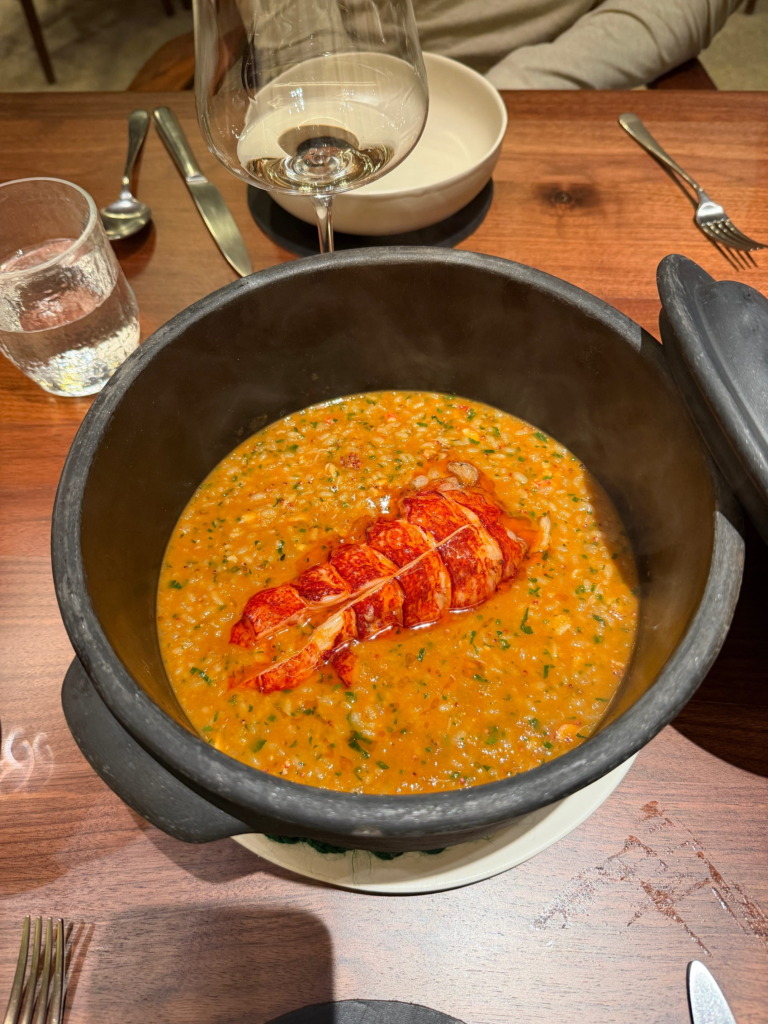
This restaurant had been on my list ever since my friend texted me mid-meal: “We’re at this restaurant that you would love.” Say less. The room is intimate and warm, the menu leans high-end, and the lobster rice — served in a deep clay pot, coral-orange and fragrant — was the kind of dish that makes the price tag irrelevant.
Taberna Sto Antonio
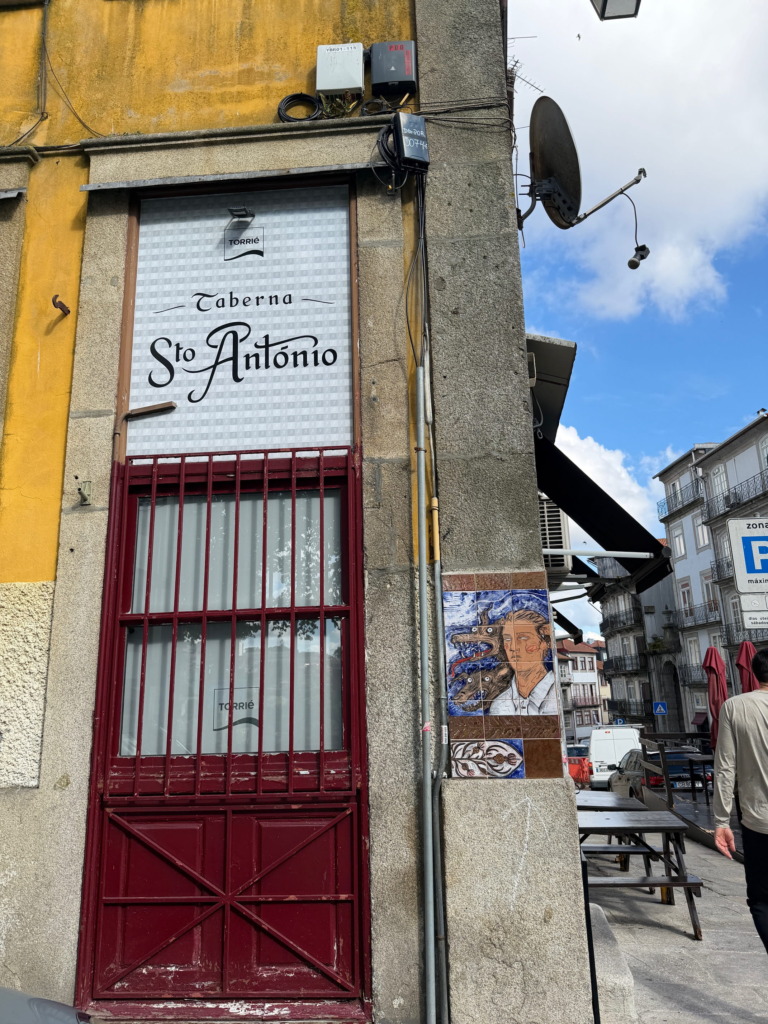
Sto António came recommended by our concierge at Torel Avantgarde, who we’d given a very specific assignment: something good, something close, something traditionally Portuguese. He delivered. Our waiter made a strong first impression (you already know about the Vinho Verde), so we handed him the reins on the food as well. What arrived: a slow-roasted ham dish that was outstanding (and I don’t even like ham) and a seafood rice loaded with whatever came off the boat that morning. A great first meal in Porto, and one I’d recommend without hesitation to anyone visiting for the first time.
OGI
The bakery to know in Porto. Get there early if you want a real selection; they sell out fast and close up once they do. Don’t say I didn’t warn you.
MiBa Bakery
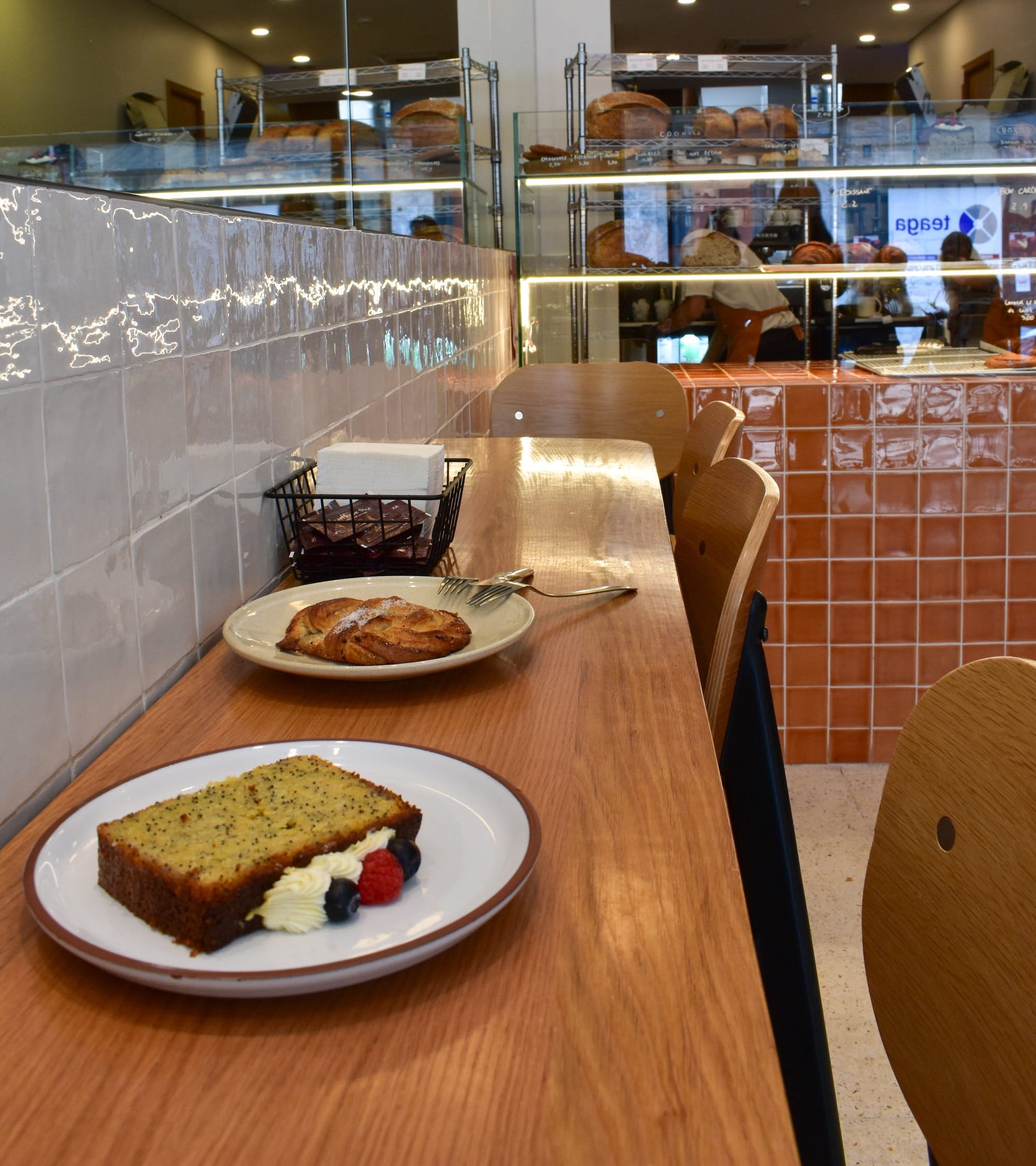
MiBa is a small neighborhood bakery that earns its spot on the itinerary. Everything we tried was excellent, but the lemon poppyseed loaf is what I’m still thinking about – dense, citrusy, topped with a cloud of whipped frosting and a few berries that pulled it all together. As a bonus, we ended up chatting with a friendly local couple who handed us a full list of recommendations. Good pastries and good intel. That’s a yes from me.
Bosco
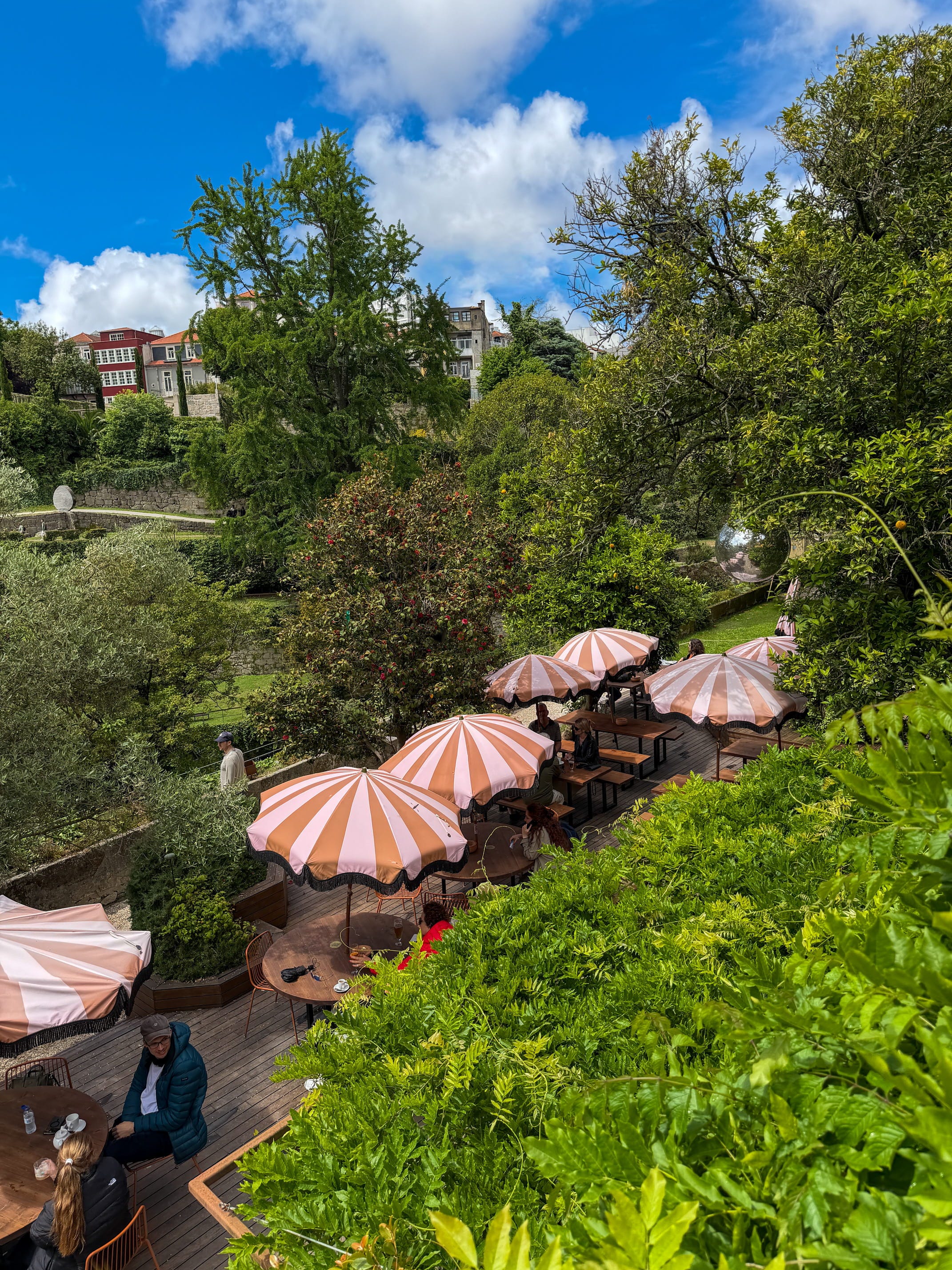
Bosco is an outdoor bar draped in greenery with views straight down to the Douro. Drinks only — locals will tell you this upfront, so plan dinner elsewhere. I ordered an Aperol spritz as the sun was beaming off the river, and for about an hour, everything was exactly right. We arrived early afternoon and had our pick of tables. By the time we left, it had filled up fast. Go early.
Manteigaria
Manteigaria is where you try your first Pastel de Nata, Portugal’s iconic custard egg tart. The cult following is, frankly, completely justified.
Confeitaria do Bolhão
Don’t skip Confeitaria do Bolhão before heading into the Bolhão market. The woman behind the counter will talk you into a pastry, and if you make the mistake of ordering a croissant, she’ll tease you for it. Fairly, I’d say. Order something Portuguese.
Amorino
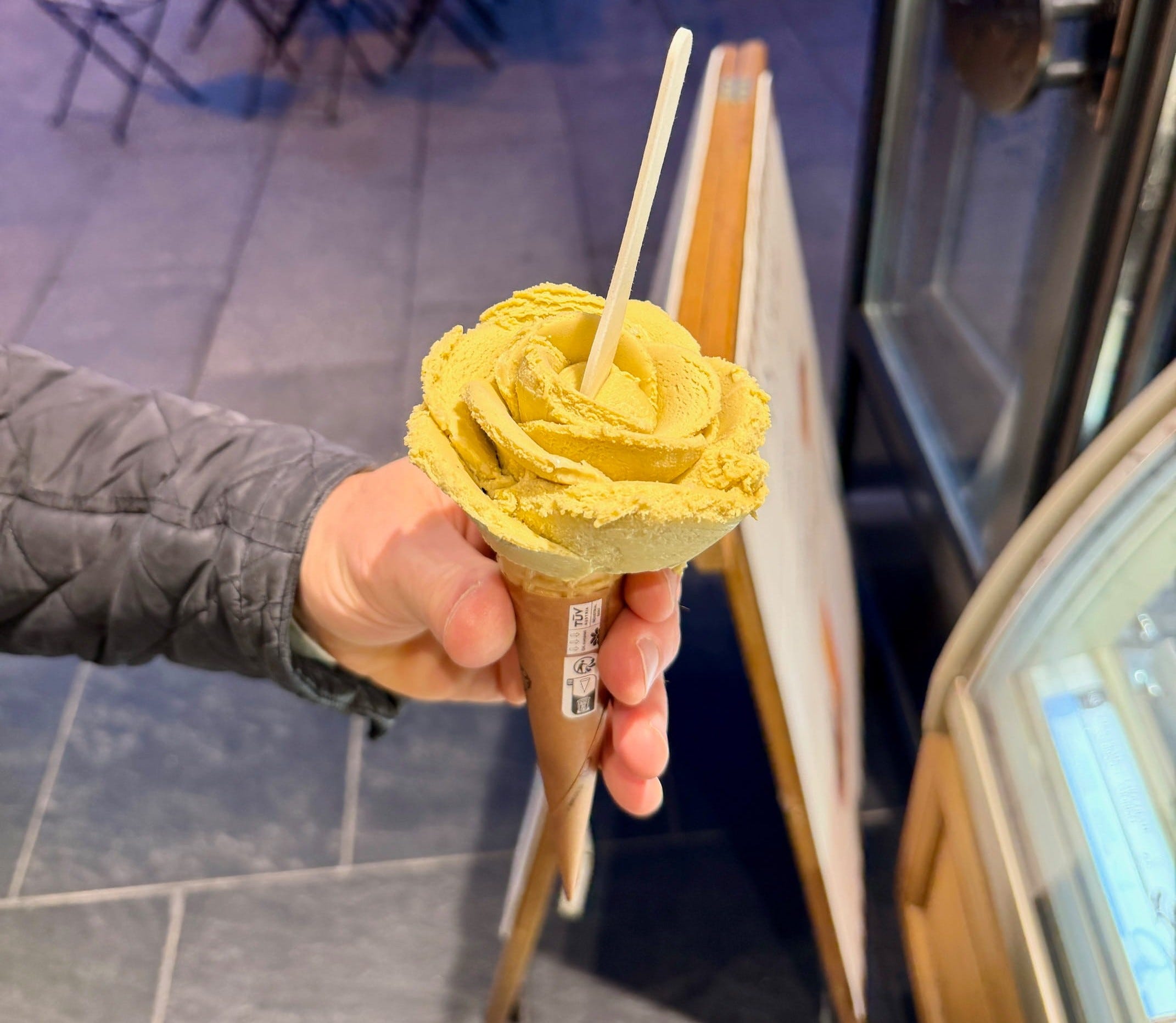
Because what European vacation is complete without gelato?
Things to Do in Porto
Port tastings in Vila Nova de Gaia
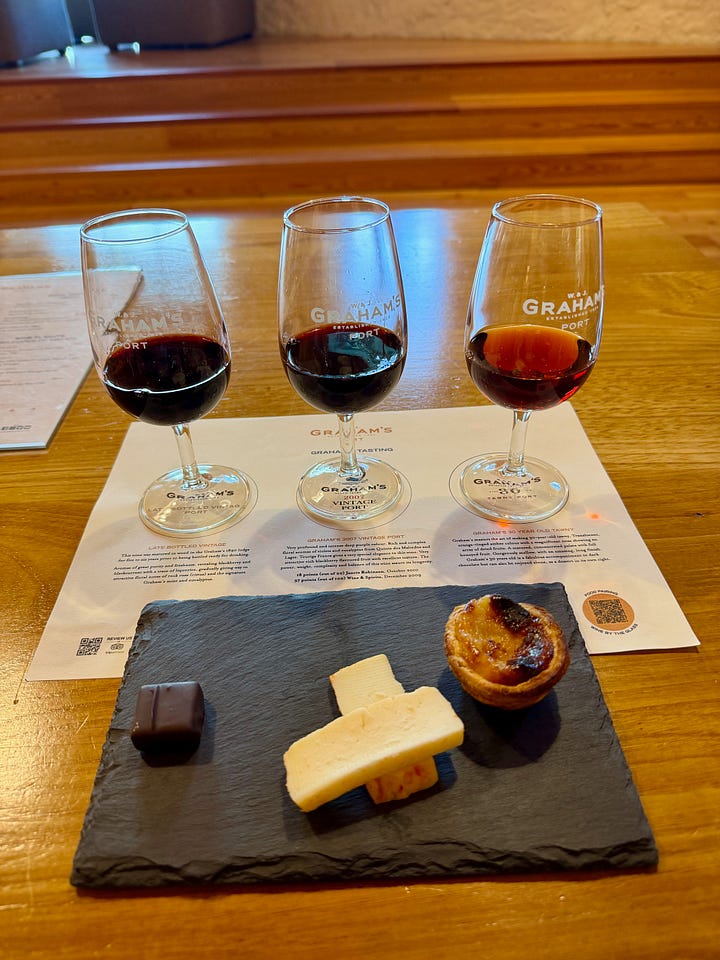
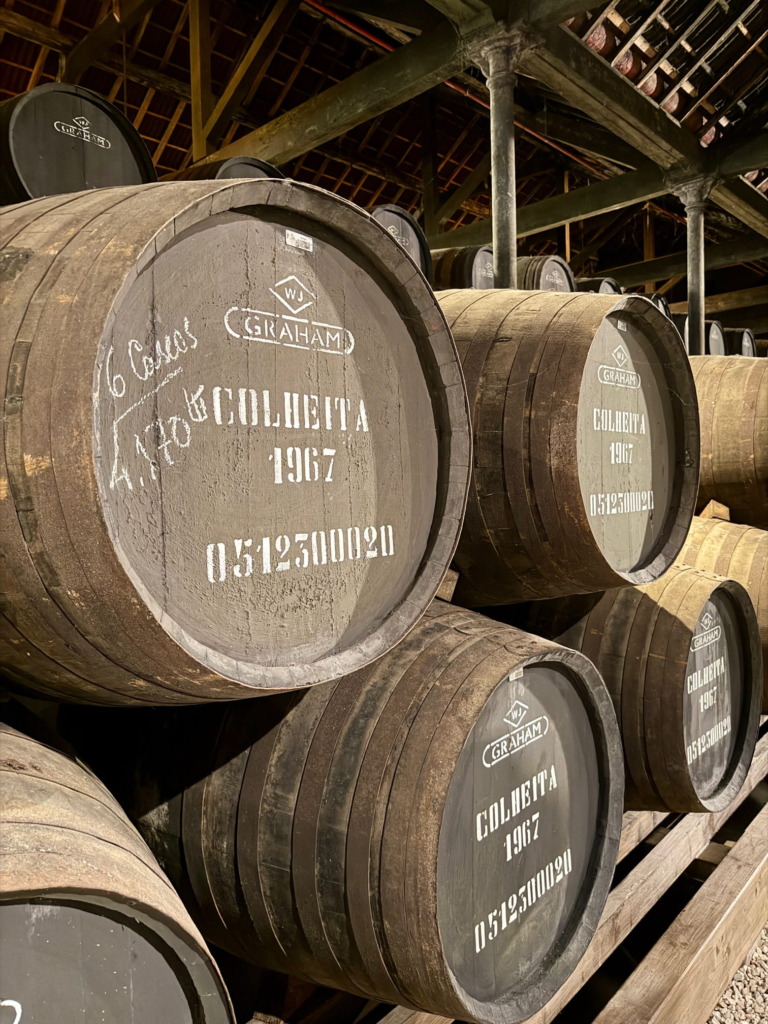
Cross the Dom Luís I Bridge and you’ll land on the south bank of Vila Nova de Gaia, home to nearly every major port house in Portugal. We booked a tour at Graham’s, which I’d honestly skip next time. Instead, head straight to the outdoor terrace, find a seat overlooking the Douro, and order a glass of port. The tour is optional. The terrace is not.
Mercado do Bolhão
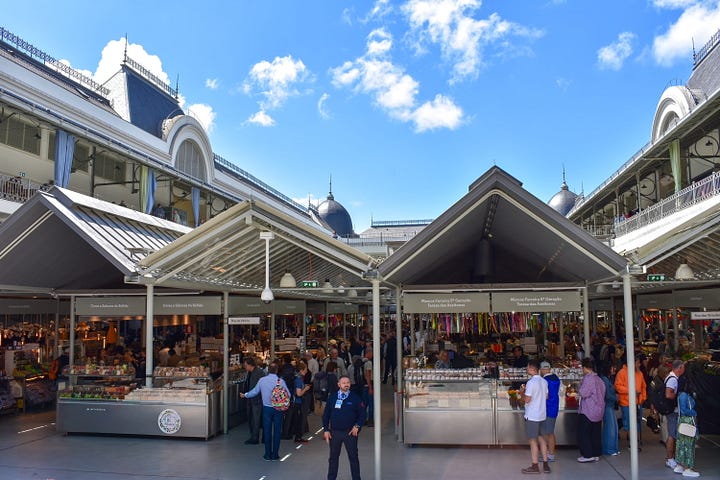
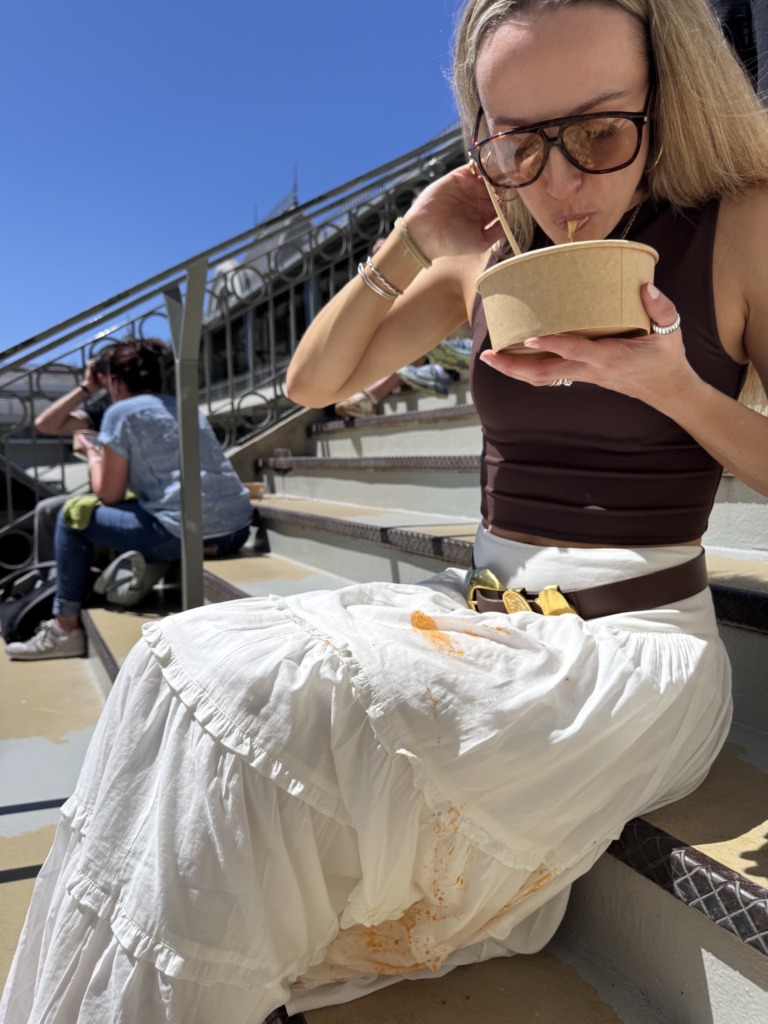
Porto’s largest municipal market is best approached with a game plan. Take a lap first. Stroll past the fish stalls, the fruit vendors, the carving stations, and everything in between, before committing to anything. We started with fresh fruit, picked up a Vinho Verde and a Superbock, and ended with fresh pasta that was absolutely worth it. My white skirt would disagree. Come hungry, explore slowly, and wear something dark.
Rua das Flores
Bright, cobblestoned, and best experienced without an agenda. We ducked into an unnamed wine bar along the way, found a table outside, and spent an hour listening to a talented street performer in the square over a bottle of crisp white wine. Walk it and see where it takes you.
Rua da Vitória
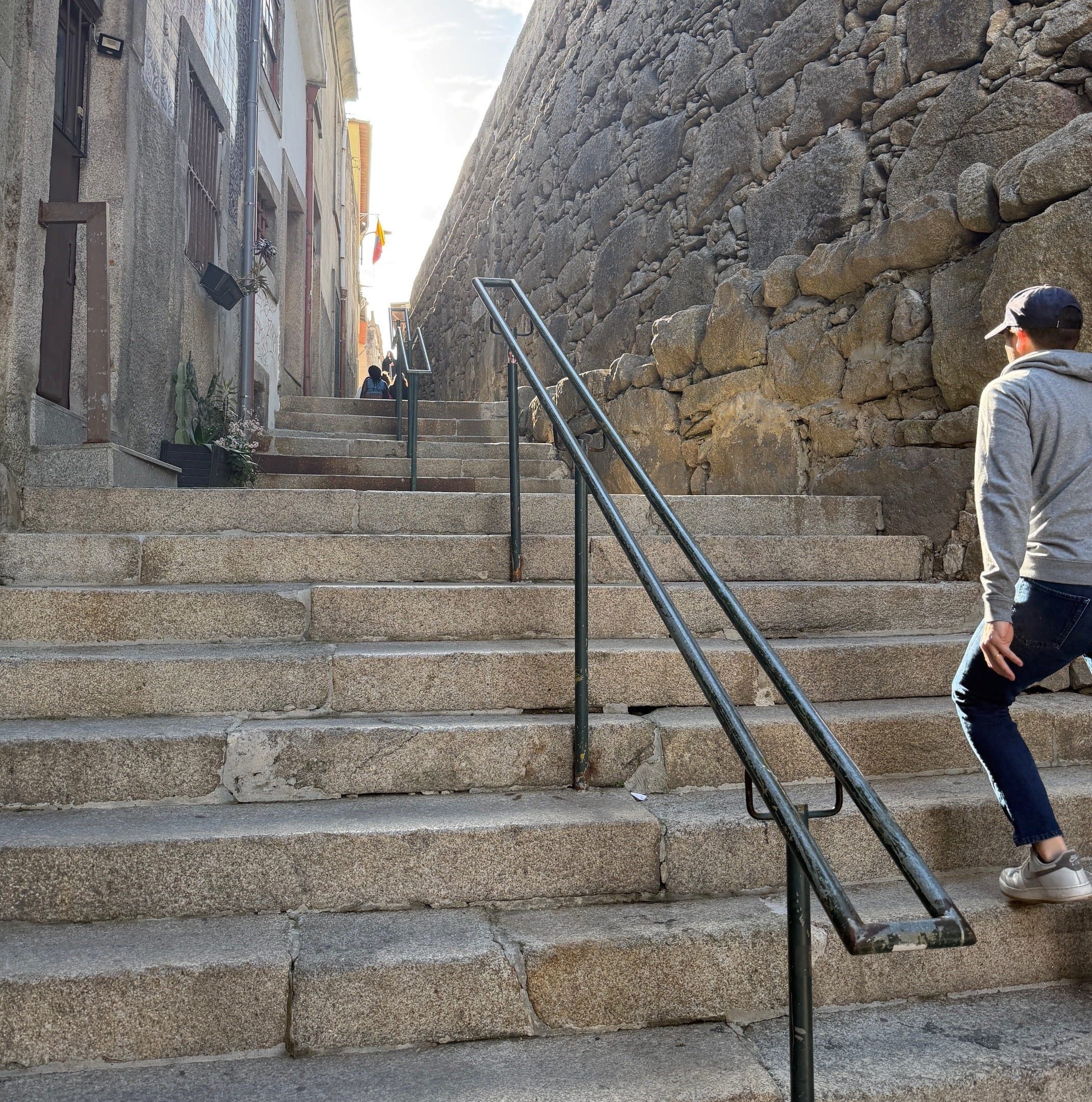
Tucked into Porto’s ancient Jewish quarter, Rua da Vitória is a winding cobblestone street lined with traditional tiled houses. You’ll often find artists painting on the steps, drawn by the panoramic views at the street’s miradouro, or lookout point. Rua da Vitória looks remarkably like Diagon Alley, except it’s been here far longer than Hogwarts.
Rua de Miguel Bombarda
A street lined with independent galleries and exactly the kind of place I was excited to explore after a recent move. What I did not know: the galleries are closed on Sundays. Guess which day we showed up. Add it to your list, but go Tuesday through Saturday.
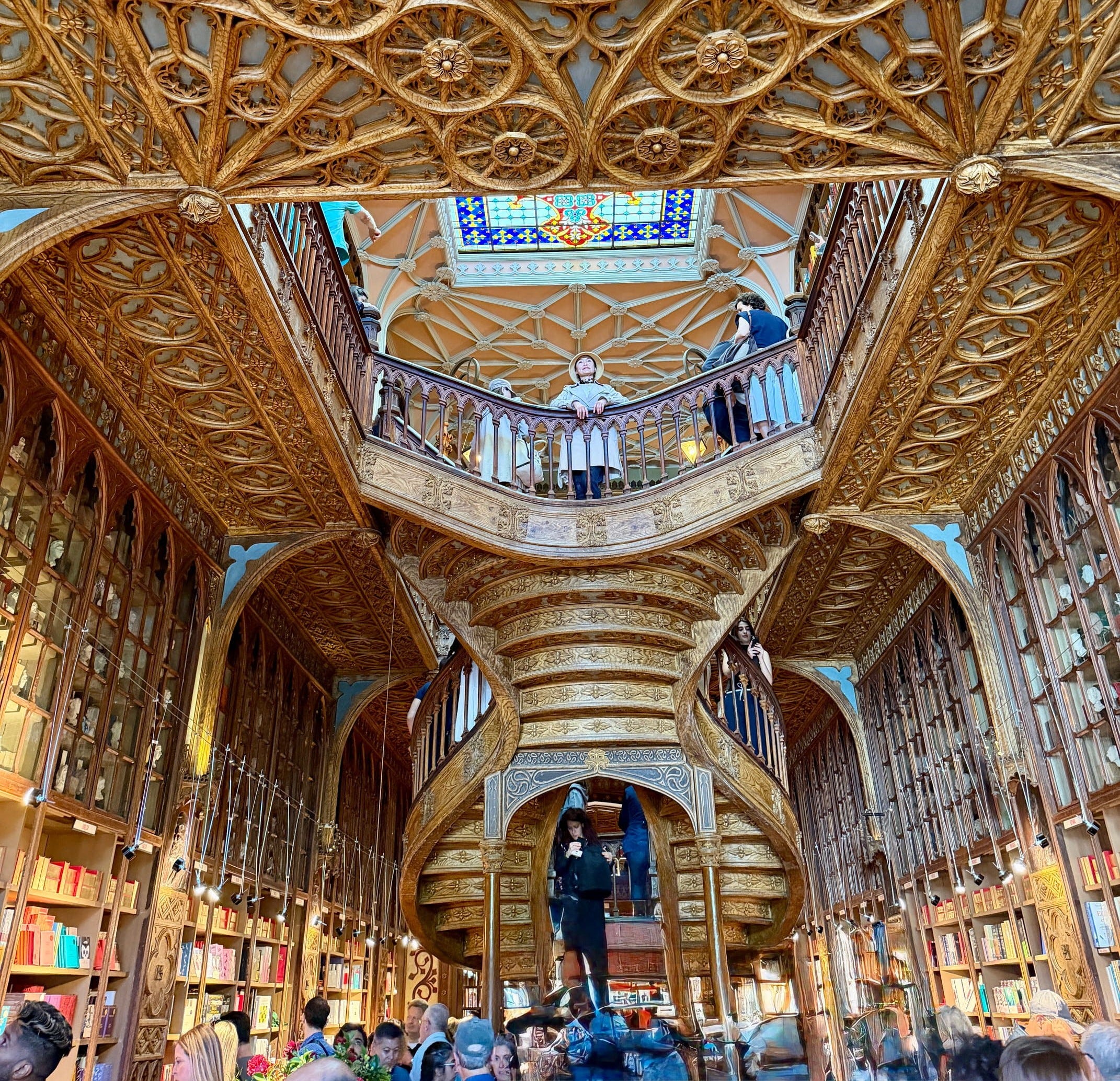
Livraria Lello (but go early)
Yes, it’s billed as “the Harry Potter library.” Yes, J.K. Rowling has denied ever visiting. And yes, you should still go. Take one look at that staircase and try to tell me it doesn’t belong in Hogwarts. Worth the small entry fee, worth arriving before the crowds do.
Before You Go to Porto
Porto is not a city that overwhelms you with things to do. It’s a city made for sleeping in, for taking the long walk instead of the cab, for ordering another glass of wine when you probably should have asked for the check. It’s two or three days, done well, and it pairs beautifully with Lisbon or the Douro Valley if you’re building out a longer Portugal itinerary (which I recommend).
The traveler Porto suits best is someone who finds pleasure in the details: a perfect pastel de nata eaten standing up outside a bakery, an afternoon watching the river from a port cellar terrace, a meal where you hand the waiter the reins and he exceeds every expectation. If you want a packed schedule and a long list of monuments, Porto might leave you restless. But if you enjoy a slower pace, Porto has a way of making you feel like you got it exactly right.
Until next time, Porto.